Microcement finishing services in Vilnius
Seamless, modern and luxurious finishes for floors, walls, ceilings, bathrooms, stairs, living rooms and business spaces. Microcement creates a clean surface without tile joints, making the interior look lighter, more expensive and more cohesive.
The price from 35 €/m² applies to microcement work on a prepared, solid and level substrate. Substrate preparation, waterproofing and materials are calculated according to the situation.
Get a quote for microcement work
Tell us where you plan to use microcement: in the bathroom, living room, kitchen, on floors, walls, ceilings, old tiles or in business premises. Attach photos if you have any.
- We will assess whether the substrate is suitable for microcement.
- We will tell you whether skim coating, levelling or waterproofing is needed.
- We will provide an indicative price based on the area and complexity.
Enquiry form
Complete the form – we will contact you about pricing and timelines.
What is microcement?
Microcement – is a thin, multilayer decorative finishing system used for floors, walls, ceilings, bathrooms, stairs and furniture surfaces. It creates a seamless surface without tile joints and is suitable for modern residential and commercial interiors.
- Suitable for floors, walls, ceilings, bathrooms and shower areas.
- Can be applied over prepared concrete, plaster, plasterboard or old tiles.
- The final price depends on the substrate, waterproofing, materials and surface complexity.
- The advertised price “from 35 €/m²” refers to the labour cost on a prepared substrate.
Microcement in Vilnius for homes and businesses
Microcement finishing services in Vilnius are becoming increasingly popular as people no longer want only standard tiles, laminate or painted walls. Microcement provides a seamless, clean, luxurious and architecturally modern look. It looks particularly good in bright interiors, bathrooms, luxurious living rooms, kitchens, corridors, stairwells and business spaces.
Namstatyba.lt carries out microcement work in Vilnius and the Vilnius region. We can install microcement floors, microcement walls, ceilings, bathroom surfaces, shower areas, fireplace walls, stairs and commercial spaces.
Our goal is not just a beautiful look in a photo, but also the correct application process: a stable substrate, proper priming, base coats, decorative coats, sanding and protection.
Cost of microcement work
The cost of microcement work depends on the surface type, substrate condition, area, waterproofing, corners, niches, stairs, drains and the chosen material system. Therefore, the fairest approach is to separate the price into labour cost and the estimated total price including materials.
| Surface | Labour from | Estimated total price | When does the price increase? |
|---|---|---|---|
| Microcement walls | from 35 €/m² | 55–90 €/m² | Uneven walls, skim coating, cracks, complex texture |
| Microcement floors | from 35–45 €/m² | 65–120 €/m² | Reinforcement, mesh, uneven substrate, underfloor heating |
| Microcement ceilings | from 40 €/m² | 60–100 €/m² | Overhead work, LED niches, uneven areas |
| Bathroom | from 45 €/m² | 80–150 €/m² | Waterproofing, shower area, drains, corners, additional varnish |
| Microcement over tiles | from 45 €/m² | 80–140 €/m² | Levelling tile joints, special primer, tile inspection |
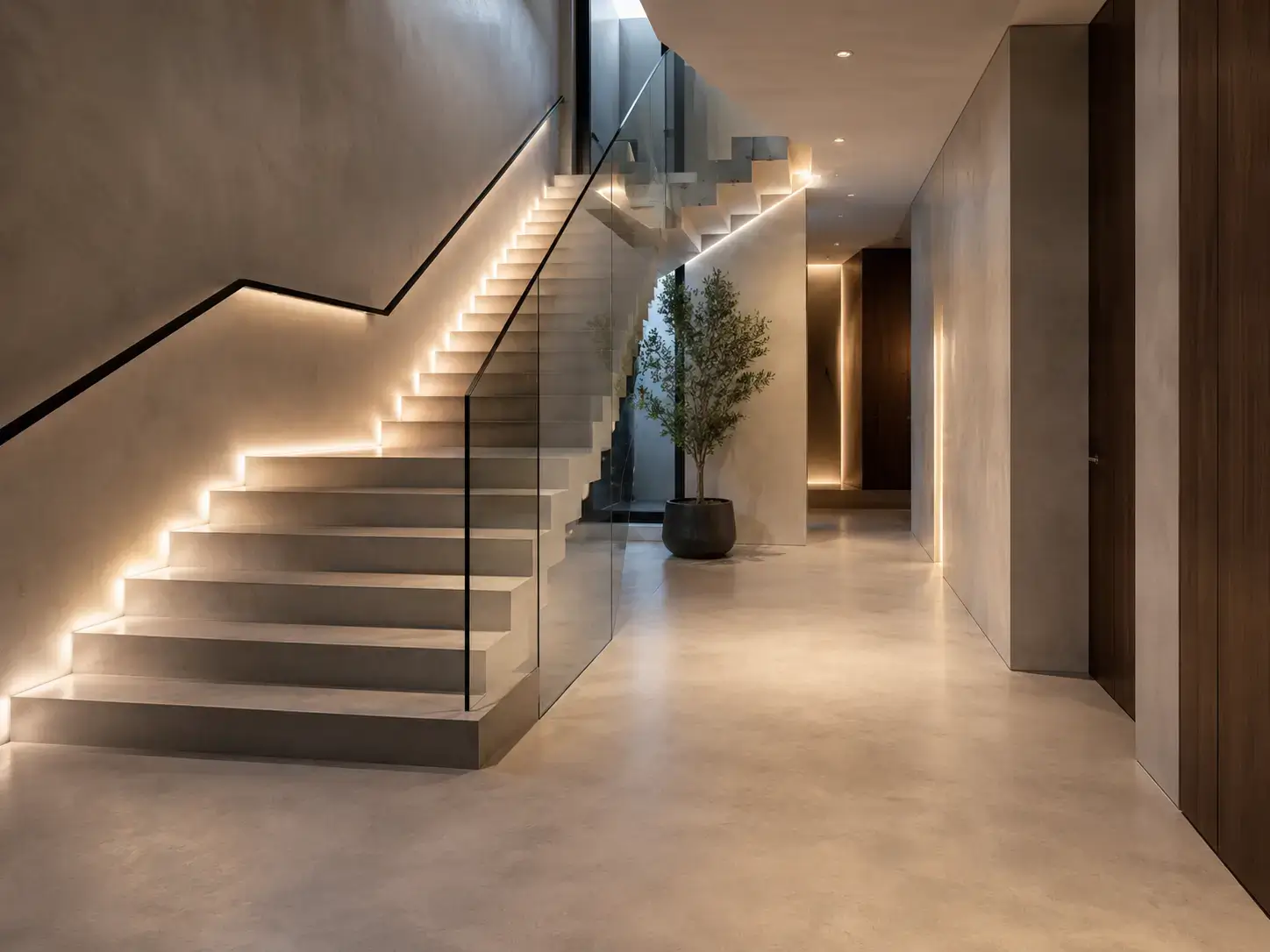
| Microcement stairs | quoted individually | 90–160 €/m² | Many edges, corners and steps, impact-resistant protection |
Microcement applications in different spaces
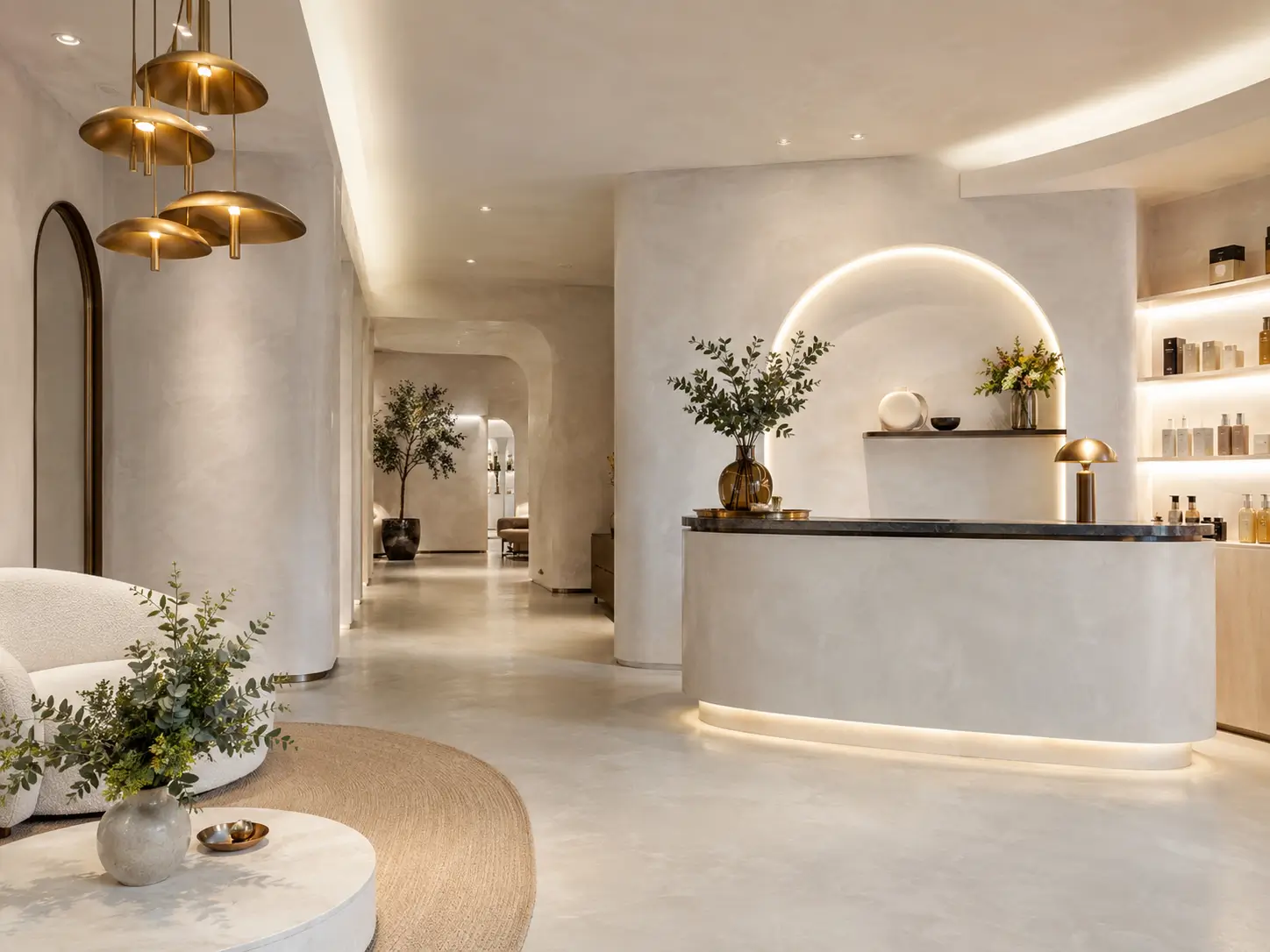
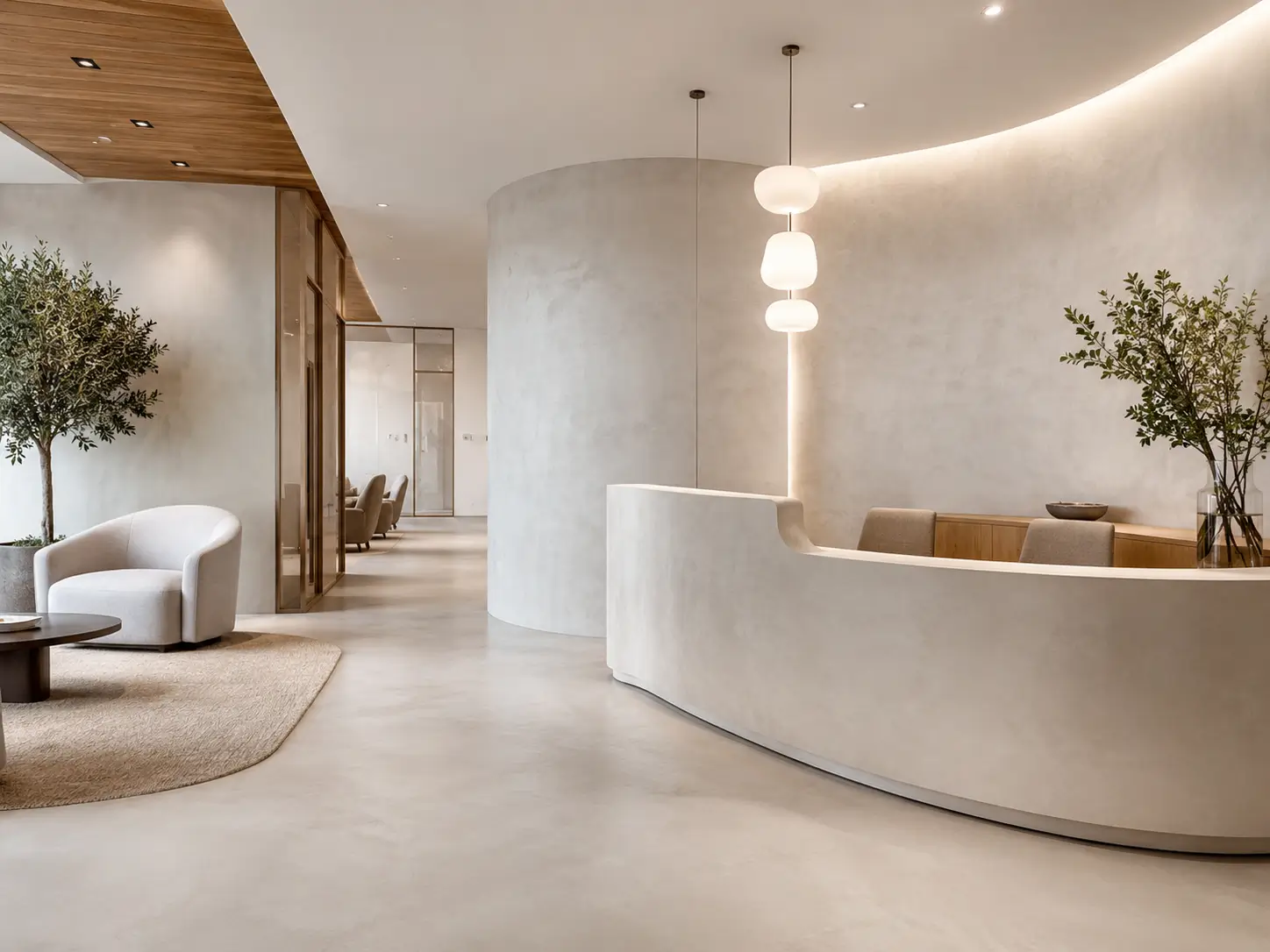
One of microcement's greatest advantages is its versatility. The same finishing principle can be used in a bright home with white ceiling surfaces, a luxurious bathroom, a living room with a fireplace, a bedroom, a stairwell or a modern business reception area.
For floors
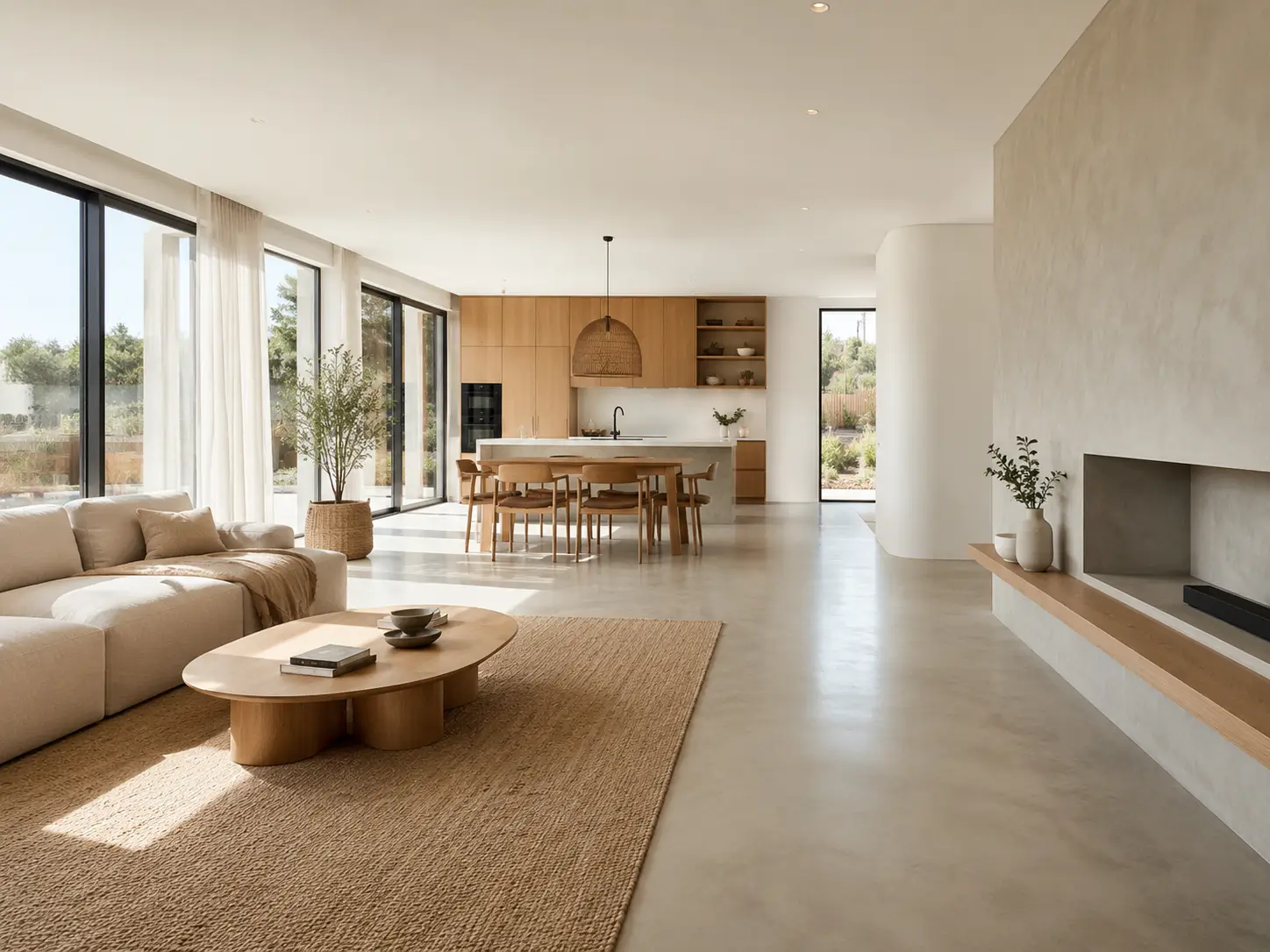
Microcement floors create a seamless surface without joints and beautifully connect the kitchen, living room, corridor and dining area.
For walls
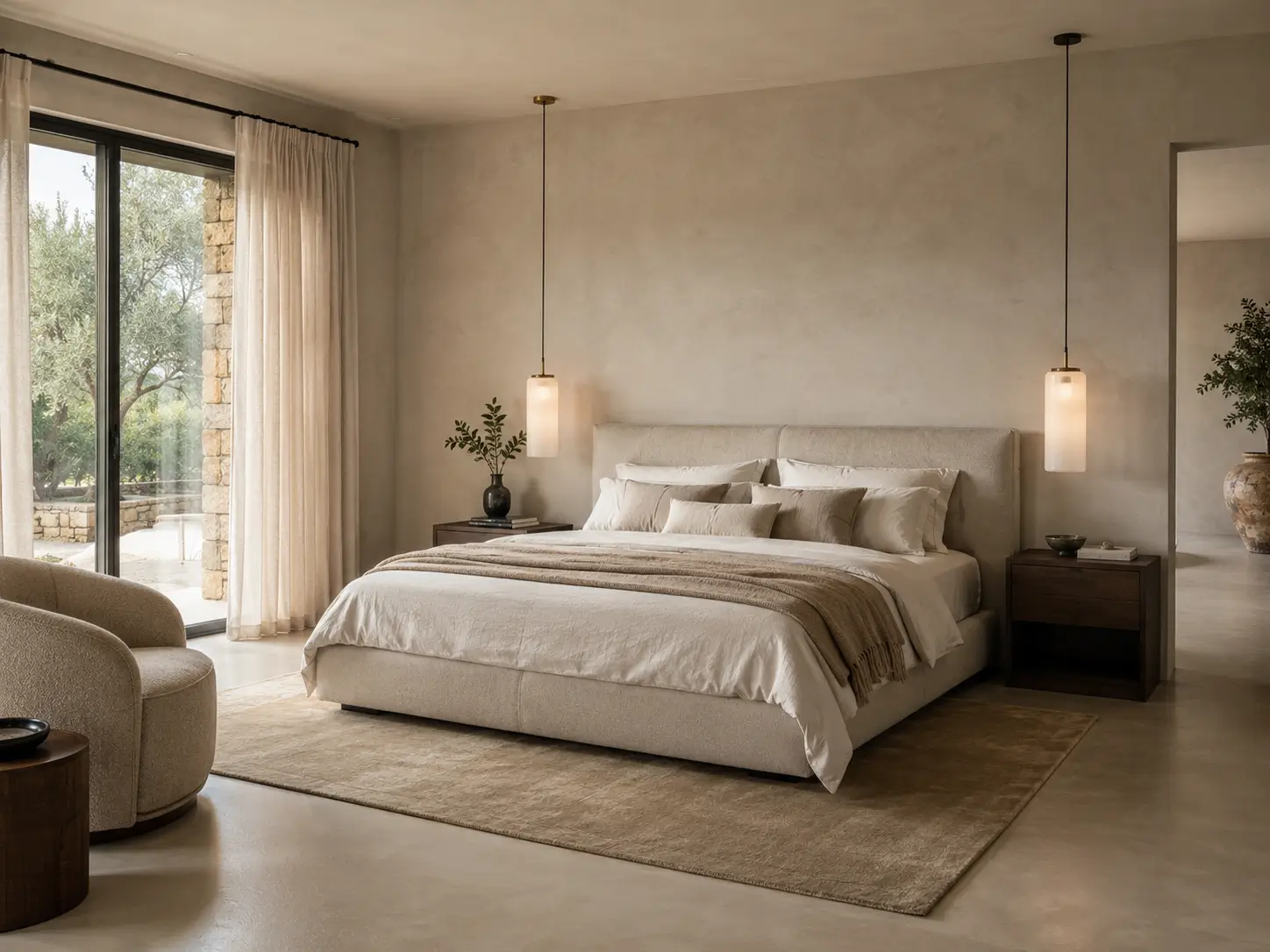
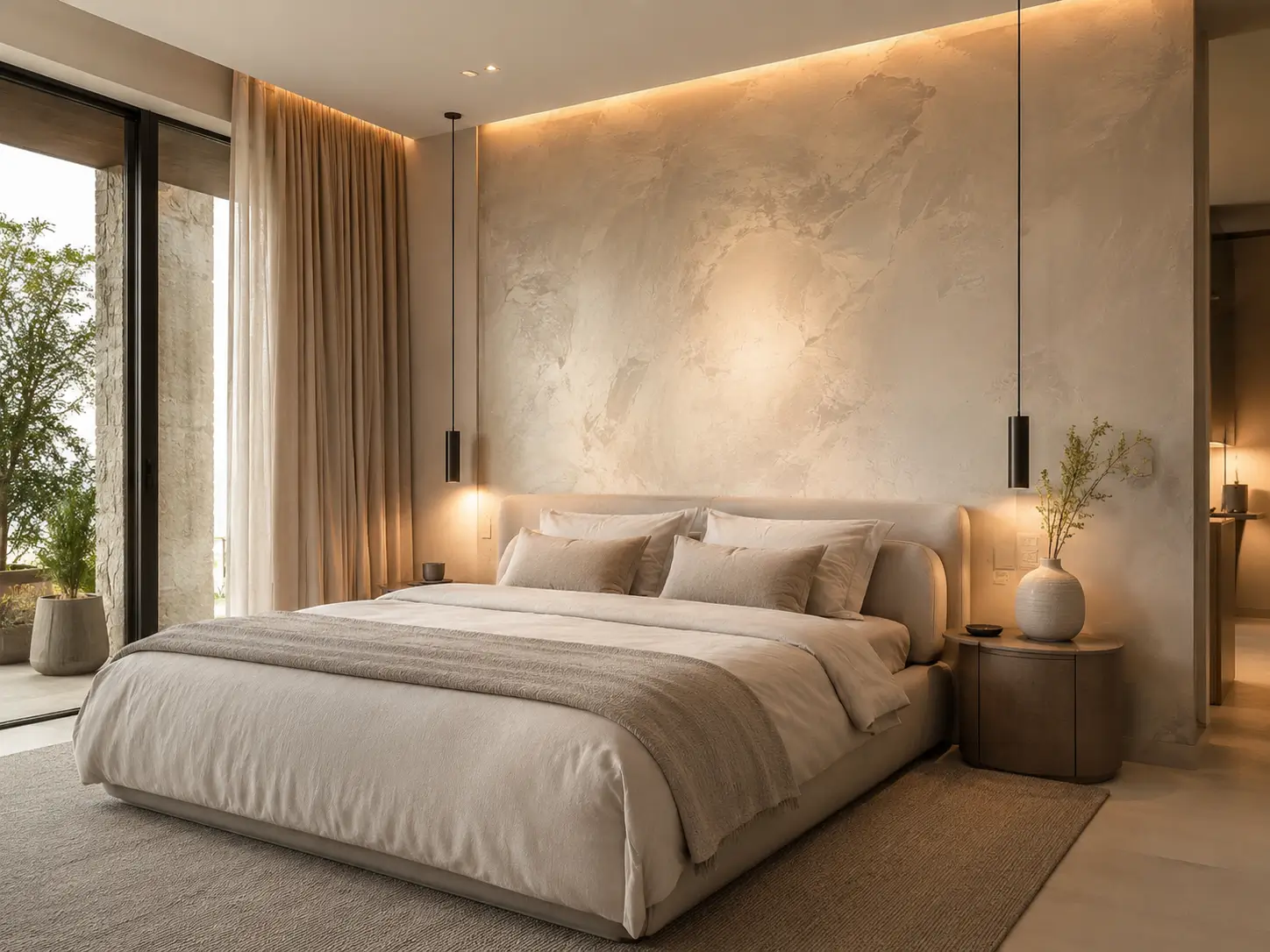
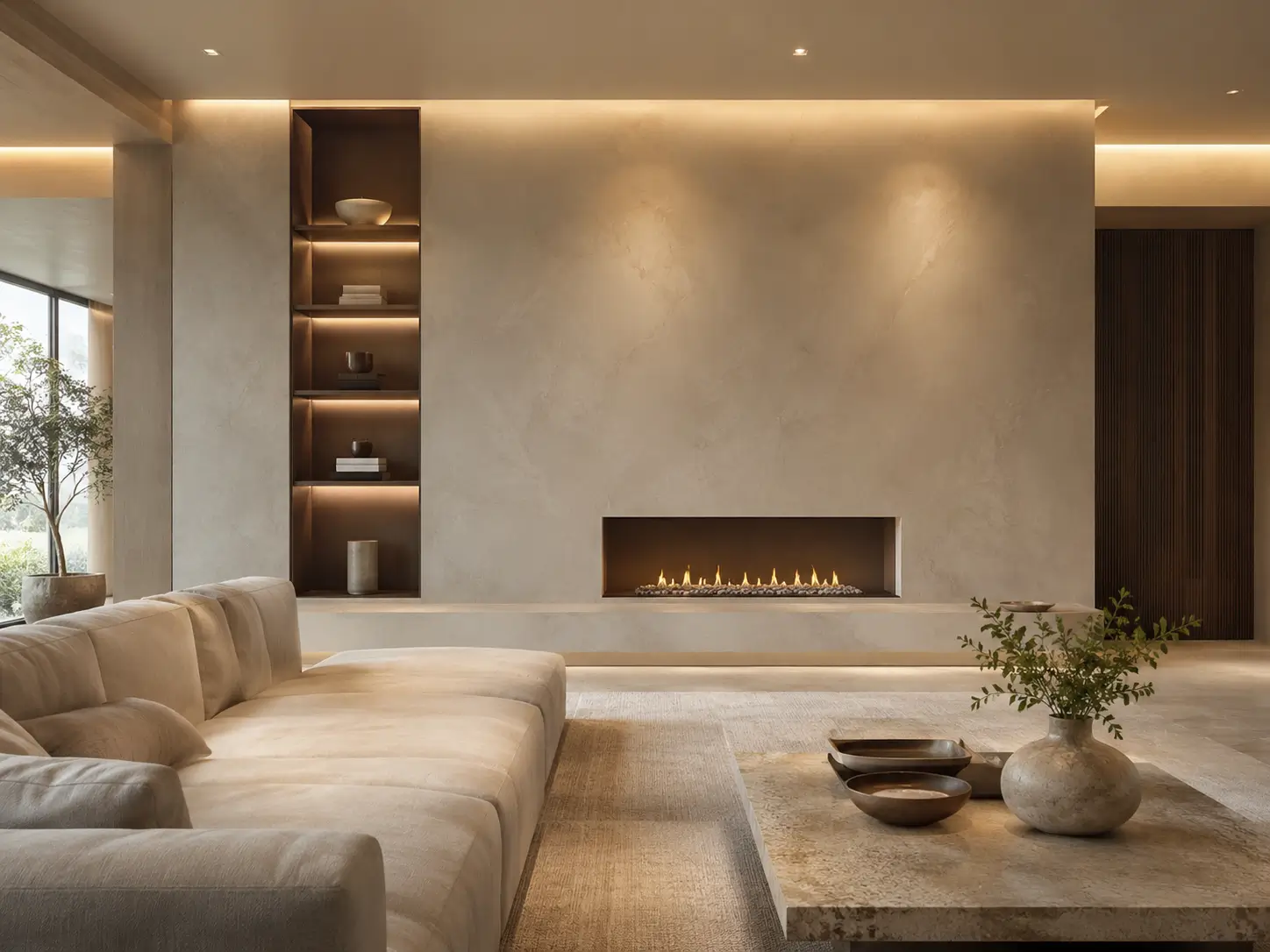
Microcement walls are suitable for feature areas, fireplace walls, bedroom headboard walls, niches and decorative textures.
For bathrooms
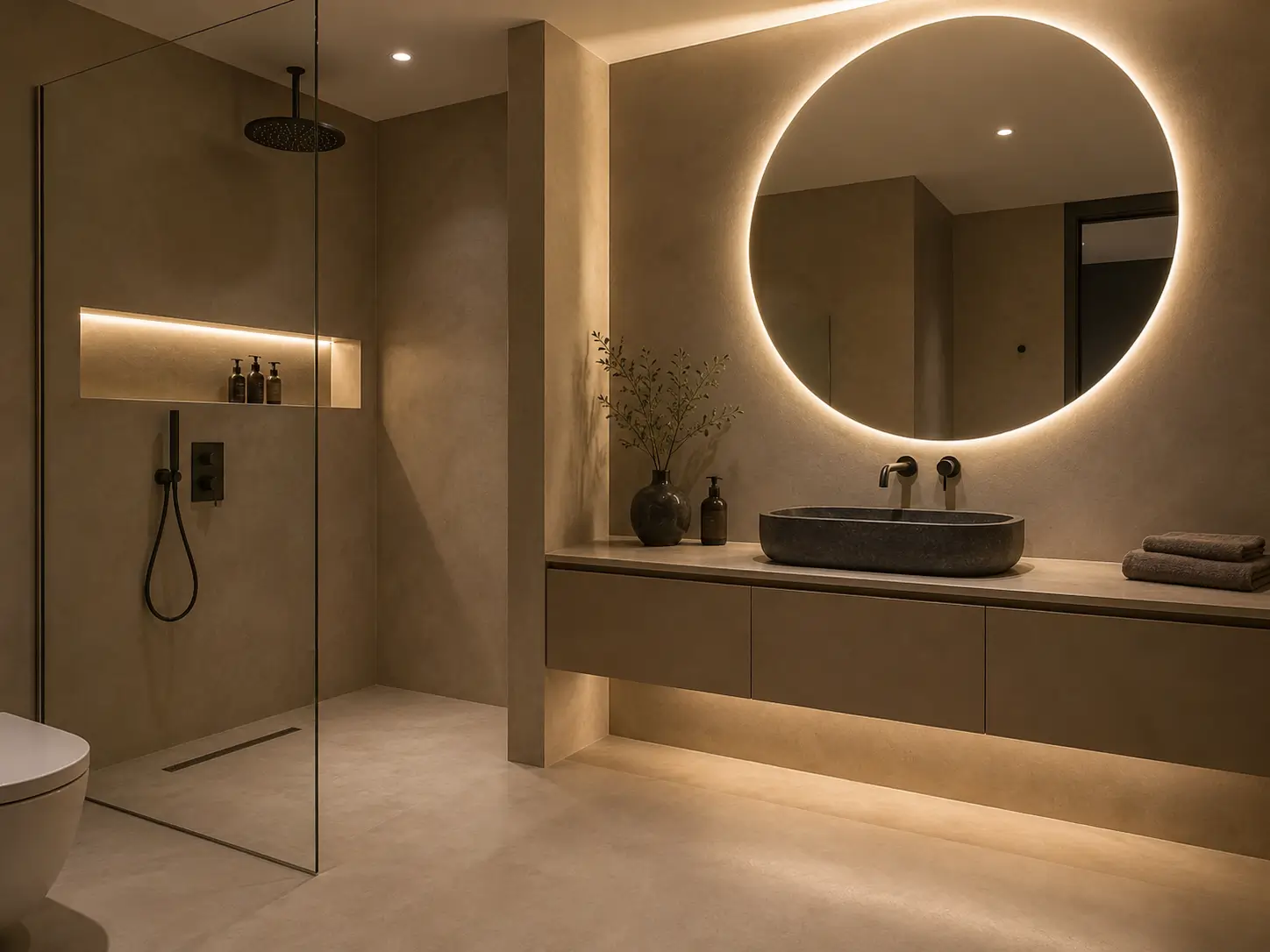
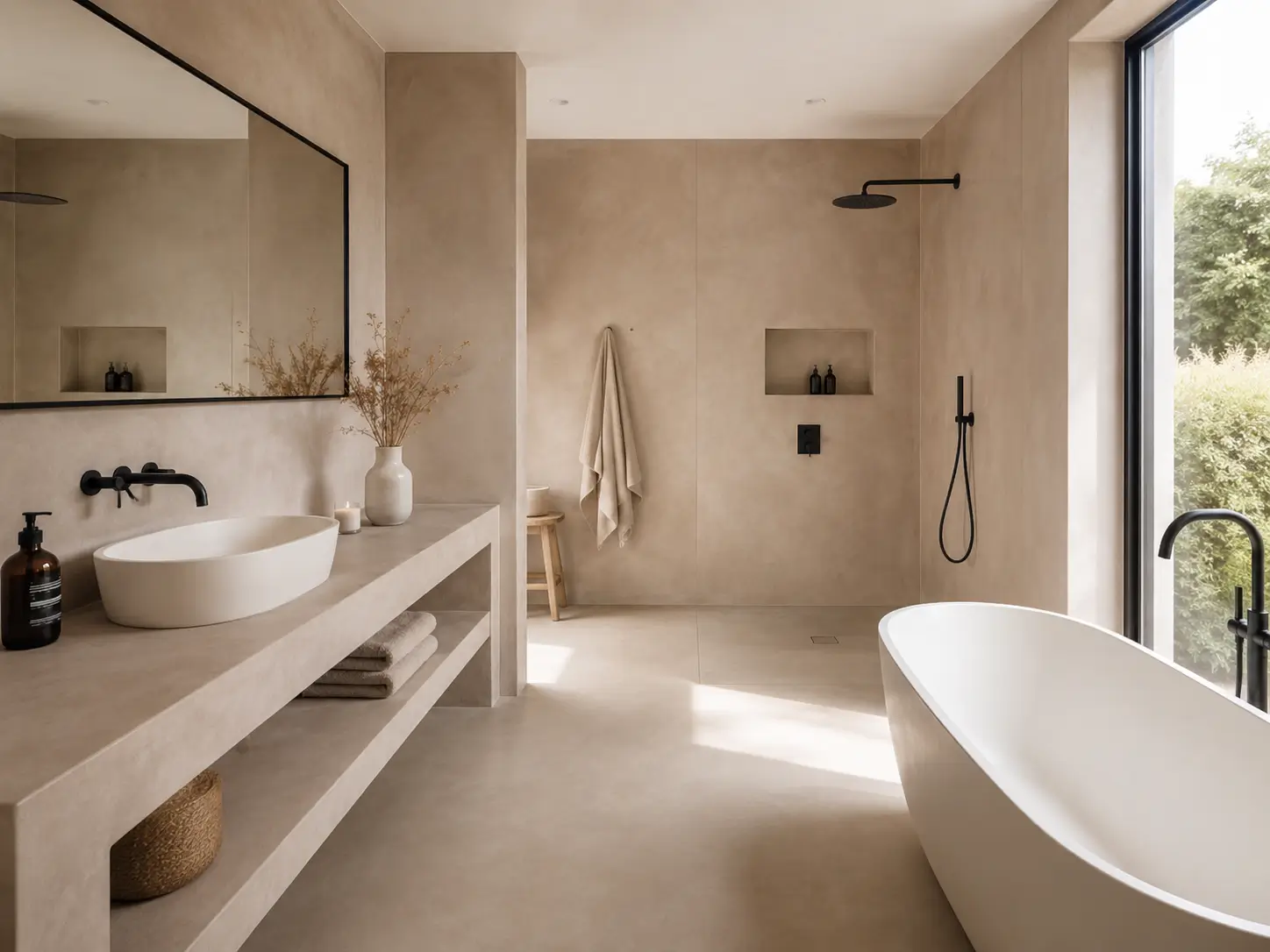
Microcement for bathrooms allows you to eliminate tile joints and create a seamless SPA-style interior.
Microcement for bathrooms and shower areas
Microcement is chosen for bathrooms when a seamless, luxurious and clean look without tile joints is desired. This finish looks particularly good with a glass shower screen, black or brass-coloured taps, LED lighting, niches and minimalist bathroom furniture.
In a bathroom, the application process is just as important as the design. The shower area must have a properly prepared substrate, waterproofing, appropriate slopes, sealed corners and an adequate protective varnish system. This is why bathroom microcement usually costs more than microcement for ordinary walls or dry rooms.
- Suitable for walls, floors, shower areas, niches and washbasin areas.
- Helps create a seamless SPA-style interior.
- Less visual clutter than tiles with joints.
- Requires proper waterproofing and protective varnishing.
A bathroom without tiles – a modern alternative to traditional finishes
Microcement is a modern alternative to bathroom tiles, allowing you to create a seamless, water-resistant and easy-to-maintain finish without joints. Instead of conventional tiling, a seamless coating can be installed on walls, floors, the shower area, niches, the washbasin countertop or the WC area.
The greatest advantage – in many cases there is no need to break out the old tiles. If the existing tiles are firmly attached, the surface can be prepared: joints are levelled, suitable primers are used, waterproofing is installed and a microcement layer is applied on top. This allows the bathroom to be renovated faster, more cleanly and with less construction waste.
This is particularly relevant in flats and occupied homes, where completely stripping out a bathroom means dust, noise, waste removal, a longer timeframe and a greater risk of damaging utilities. Microcement over tiles can be a very good solution when the substrate is stable and there is no serious moisture damage.
Where can microcement be used in a bathroom?
Microcement is not just suitable for walls. With proper substrate preparation, it can be used in almost all bathroom areas.
Why are more and more customers choosing a bathroom without joints?
Tiles have long been the standard solution for bathrooms, but today more and more people are looking not for a “tiled” bathroom, but for a seamless architectural space. Microcement creates a look reminiscent of a modern hotel, a SPA space or a luxurious designer interior.
The main difference is that the surface is not divided into small squares. There are no gaps where dirt, limescale or mould can accumulate over time. The bathroom looks calmer, cleaner and visually larger. This is particularly important in small bathrooms, where joints and contrasting tiles often divide the space even further.
Microcement
A seamless surface without joints, a modern SPA look, suitable for walls, floors, niches, shower areas and, in some cases, old tiles.
- Seamless bathroom finish
- Less visual clutter
- Luxurious hotel / SPA effect
- Old tiles can be renovated without a complete strip-out
Tiles
A traditional solution, but the surface is divided by joints. Over time, joints can darken and accumulate limescale or mould, especially in the shower area.
- Visible joints
- More maintenance for joints
- Standard bathroom look
- Renovation often requires demolition
Want a bathroom without tiles or joints?
Microcement can transform an old bathroom into a modern, seamless and luxurious-looking space. In many cases, work can be carried out over existing tiles, avoiding a complete strip-out, dust and a lengthy renovation process.
Microcement finishing services for bathrooms – from 35 €/m². We assess the existing substrate, recommend a suitable system and provide a clear estimate.
When can microcement be applied over tiles, and when can't it?
Microcement over tiles is a good solution only when the old substrate is stable. If the tiles sound hollow, move, are loose or have a moisture problem underneath, a beautiful new layer alone will not solve the problem. The cause must be addressed first, and only then should a new microcement finish be applied.
We inspect the tiles
We check whether the tiles are loose, whether there are hollow areas, and whether the substrate moves or has moisture damage.
We prepare the surface
The surface is cleaned and degreased, joints are levelled, and suitable primers and base coats are used.
We protect wet areas
In the shower area, waterproofing, corner sealing, slopes and a protective varnish system are essential.
We do not recommend applying microcement directly over moving parquet, laminate or unstable floor coverings. Such coverings usually need to be removed or a stable substrate installed to prevent the finished surface from cracking or deforming later.
Microcement floors, walls and ceilings
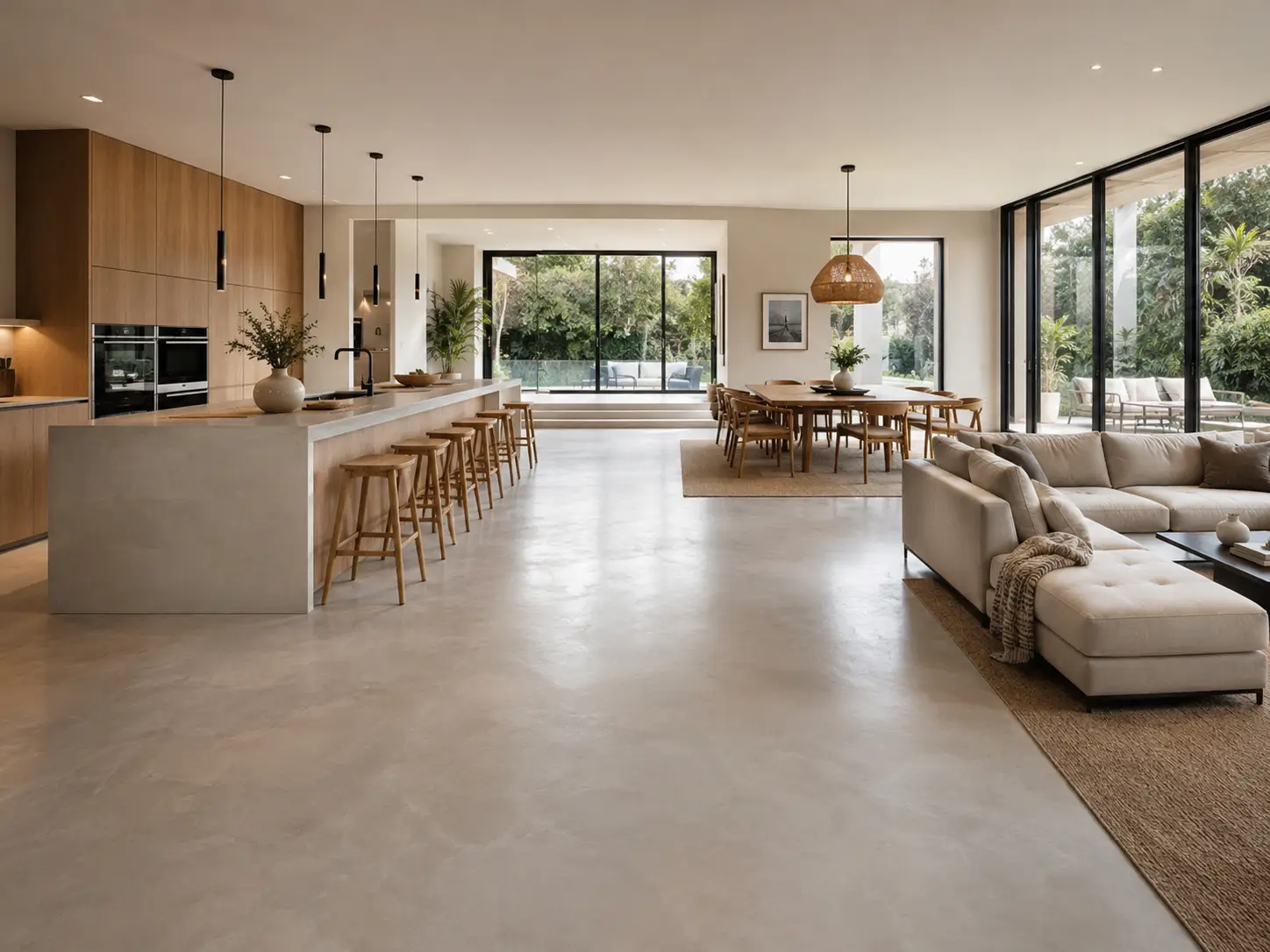
Microcement floors are suitable for open-plan spaces where a single seamless surface is desired across the kitchen, living room, corridor and dining area. Light-coloured microcement floors make the space look larger, while warm beige and grey tones bring a sense of calm to the interior.
Microcement walls are often used as a feature: around a fireplace, on a TV wall, behind a bed's headboard, on bathroom walls or for decorative texture. Unlike a painted wall, microcement has depth, a handcrafted texture and subtle movement in its pattern.
Microcement ceilings are chosen less often, but they look very good in SPA areas, bathrooms, corridors, hotels and premium interiors. Ceiling work requires a particularly good substrate and carefully planned lighting.
Can microcement be applied over old tiles?
Yes, microcement can be applied over old tiles, but only when the tiles are stable, firmly attached and the substrate does not move. This is often relevant in bathrooms when renovation without a complete strip-out is desired.
Before applying microcement over tiles, the tile adhesion must be checked, the surface cleaned and degreased, the joints levelled and a suitable primer used. Wet areas also require waterproofing.
- Tile removal and major demolition work can be avoided.
- It is essential to check that the tiles do not sound hollow and are not loose.
- Joints and uneven areas must be levelled before the decorative coat is applied.
- Proper waterproofing is essential in the shower area.
How is microcement work carried out?
Quality microcement depends on the correct sequence of work. If the substrate is poor, even the most expensive material will not save the result. That is why we assess the surface first and only then calculate an exact price.
What makes up a microcement system?
Microcement is not a single layer. It is a system consisting of a primer, a base coat, decorative coats, sanding and protection. Reinforcement is often used for floors, while bathrooms require waterproofing and additional varnish coats.
- Primer for adhesion to the substrate.
- Base coat for surface stability.
- Decorative microcement coats for colour and texture.
- Sanding to create the final surface.
- PU varnish or other protection against water, stains and wear.
- Waterproofing for wet rooms and shower areas.
Want microcement in your home or business space?
Send photos of the room, the approximate area and a brief description of where you want microcement: floors, walls, bathroom, shower area, fireplace wall, stairs or commercial space.
Frequently asked questions about microcement
Namstatyba.lt services
Microcement finishing is often planned alongside interior finishing, bathroom installation, floor preparation, house construction or an overall renovation estimate.